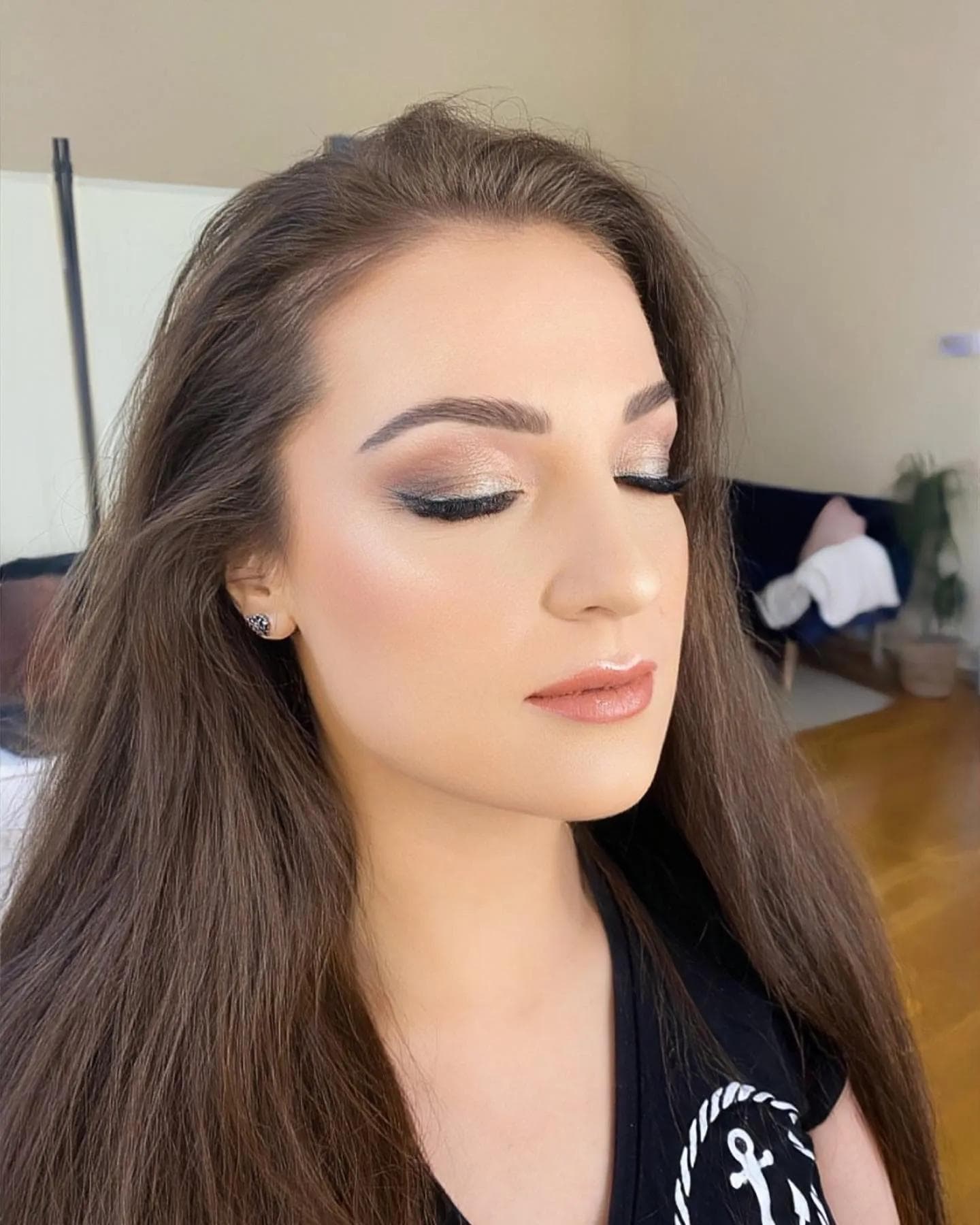
Semi-Permanent Brows and Lips: Every Question I Get Asked, Answered
Semi-permanent makeup is one of the most transformative services available - and one of the most misunderstood. Here's my honest, experience-based answer to every question I hear.
Rima Zania
Professional Makeup Artist · Toronto
Quick Answer: Semi-permanent makeup, including techniques like microblading, powder brows, and lip blushing, uses cosmetic pigment implanted into the upper layers of the skin to create lasting definition for brows, lips, and other features. Results typically last one to three years, depending on skin type, aftercare, and technique. It's not the same as traditional tattooing - the pigments are formulated to fade and the technique is placed more superficially, allowing for adjustment over time.
Semi-Permanent Brows and Lips: Every Question I Get Asked, Answered
Semi-permanent makeup is one of those services that people ask me about constantly - and the questions almost always start with nervousness. "Is it really permanent?" "Does it hurt?" "What if I hate it?" "What if it looks too fake?"
These are completely reasonable questions. This is your face, and you're talking about something that's going to be on it every day for one to three years. The stakes feel high.
What I've noticed is that most of the anxiety comes from not knowing enough - about how the process actually works, what to realistically expect from the results, and what separates a beautiful outcome from the kinds of photos people share when it goes wrong.
So let me answer every question I hear. Thoroughly and honestly.
What Exactly Is Semi-Permanent Makeup?
Semi-permanent makeup - sometimes called cosmetic tattooing or micropigmentation - is a process that uses a fine needle or tool to implant cosmetic pigment into the superficial layers of the skin. The goal is to create defined, lasting features: fuller-looking brows, defined lips, enhanced lash lines.
The key distinction from traditional tattoo ink is depth and formulation. Semi-permanent pigment is placed into the dermis at a shallower level than body tattoo work, which is why it fades over time rather than remaining permanent. The pigments are also formulated differently - they're designed to break down and fade rather than sit in the skin indefinitely.
This is both the appeal and the design of the technology: you get long-lasting results that evolve naturally rather than something locked in forever. If your tastes change or your face changes - as all our faces do - the work can be adjusted or allowed to fade.
Common Techniques: What's the Difference?
Several different techniques get grouped under the semi-permanent umbrella. Here's what they actually mean:
Microblading. This is the technique most people have heard of. A manual tool with a small cluster of needles creates fine, hair-like strokes in the skin. When done well, it looks remarkably realistic - like individual brow hairs drawn at exactly the right angle and direction. It works best on normal to dry skin; oily skin tends to cause the strokes to blur over time because excess sebum interferes with pigment retention. Results typically last one to two years.
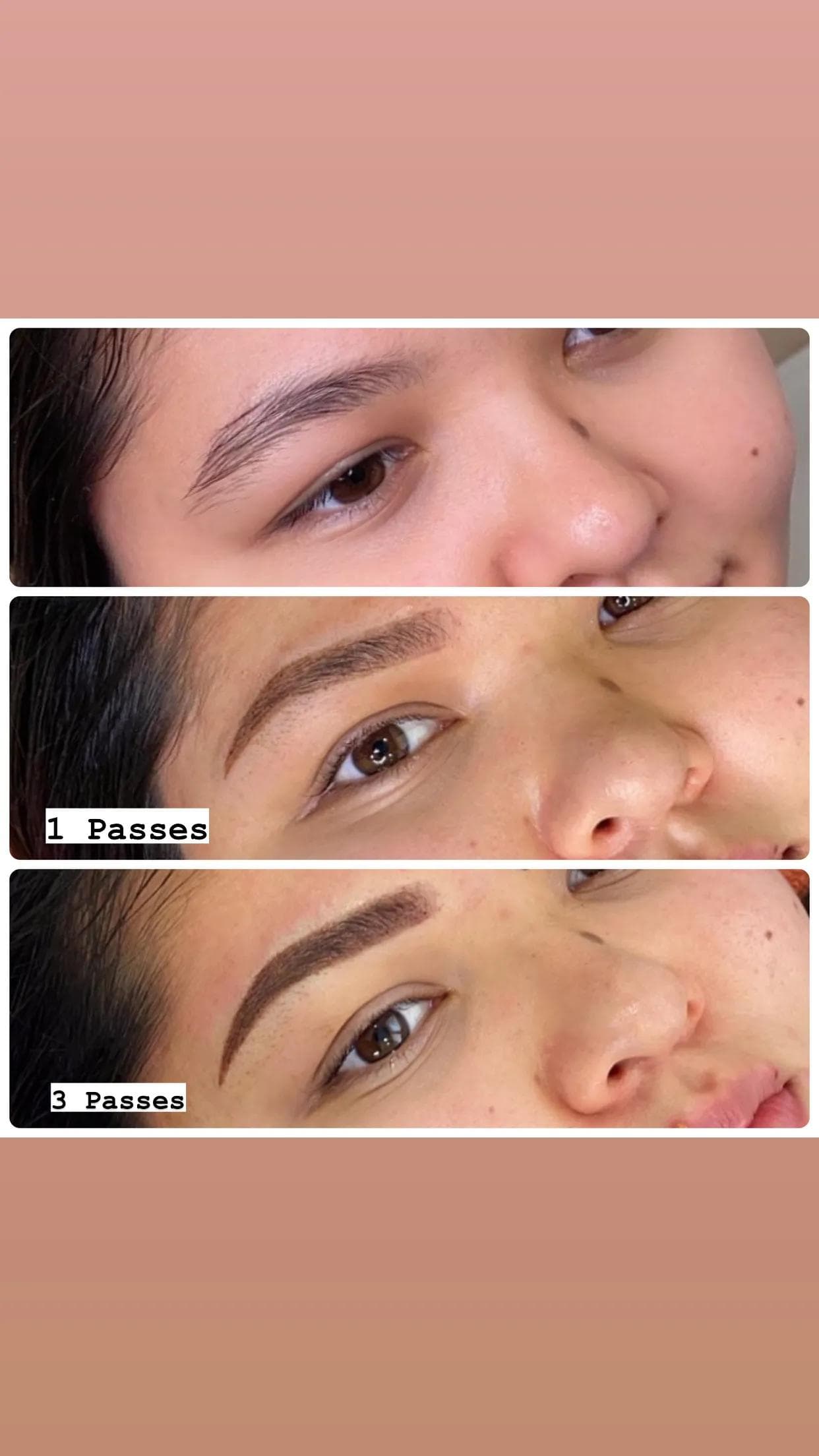
Powder brows (also called ombre brows or microshading). Instead of hair strokes, this technique uses a machine to deposit pigment in a soft, powdery pattern - similar to the effect of a brow powder or pomade applied with a brush. The result looks more filled-in and defined rather than hair-like. It works beautifully on all skin types, including oily skin, and tends to last longer than microblading - often two to three years.
Combination brows. Exactly what it sounds like - microbladed hair strokes toward the front of the brow combined with a powder-shaded body and tail. This creates dimension: natural-looking hair strokes at the front where brows tend to be sparser, and a more defined, saturated fill through the arch and tail. Many clients find this technique gives the most versatile, natural-looking result.
Lip blushing. Pigment is implanted across the lip surface to add colour, definition, and the appearance of fullness. Unlike a lip liner tattoo (which creates a hard line around the mouth), lip blushing works with the natural shape of the lip and creates a soft, blended wash of colour with defined edges. The result looks like a beautifully stained lip - not drawn on. It also corrects asymmetry, evens out lip tone, and makes the lips look fuller without filler.
Lash line enhancement. Pigment placed along the upper lash line - between the lashes themselves - creates the appearance of thicker, denser lashes without a visible liner look. It's extremely subtle and one of the most underrated semi-permanent techniques.
Does It Hurt?
I'll be honest: the word "painless" isn't quite right, but it's not the alarming experience many people expect.
Topical numbing cream is applied before the session. Most people describe the sensation as a light scratching or pressure rather than pain. Lip blushing tends to be the most sensitive because the lips have more nerve endings than the brow area; most clients find it manageable with numbing but noticeable.
Your pain tolerance, your stress level that day, and where you are in your menstrual cycle all affect sensitivity. If you're particularly pain-averse, communicating this before your session allows your artist to use appropriate numbing strategy and take breaks as needed.
Will It Look Natural?
This is the question underneath almost every other question - and the honest answer is: it depends enormously on who does it.
The difference between semi-permanent makeup that looks you-but-better and semi-permanent makeup that looks obviously done is almost entirely about the skill level and aesthetic sensibility of the artist. Shape analysis, pigment selection, colour theory, technique execution - all of these variables have a direct impact on whether the result looks natural and flattering.
When I approach brow work, I'm looking at:
Your natural brow architecture. Where your brow starts, where it peaks, where it ends - these are determined partly by your bone structure and partly by years of shaping. I work with your natural structure rather than imposing a one-size shape.
Your face shape. The ideal brow shape for a rounder face is different from the ideal for a more angular or longer face. This isn't about rigid rules - it's about understanding proportion and balance.
Your skin's undertone and the pigment's true colour. Semi-permanent pigment shifts as it heals. What goes in is never exactly what settles. An experienced artist works in the corrected, healed colour - not the fresh application - which requires understanding how pigments transform on different skin tones.
Your hair colour and natural brow hairs. The pigment needs to complement your actual hair. A pigment that photographs beautifully on a brunette can look disconnected on someone with lighter, finer hair.
If any of these factors are ignored - if an artist uses a standard template shape, doesn't account for how colour heals, or prioritizes the immediate post-session result over the healed one - you'll have a result that looks fine on day one and wrong by week four.
What Does the Healing Process Look Like?
This is genuinely the part that catches people off guard, and I think artists don't talk about it clearly enough.
Immediately after the session: Your brows or lips will look significantly more intense than the final result. Colour is always boldest immediately after application. This is normal and expected.
Days 2-5: The area will begin to heal. In brow work, this often means the area looks darker and slightly textured as the skin forms a protective layer. In lip work, there's often some swelling and the colour may look uneven.
Days 5-10: Peeling or flaking occurs as the superficial skin sheds. This is the stage where colour looks like it's disappearing - sometimes dramatically so. Many clients message me during this stage convinced their results aren't working. They almost always are. The underlying pigment is settling and the surface peeling is just the healing process.
Weeks 2-4: Colour softens significantly. The true healed result begins to emerge. Most brow and lip results settle to about 60-70% of the original pigment intensity, which is exactly the soft, realistic look we're aiming for.
Week 6-8: The touch-up. A follow-up session is standard practice after initial healing. This is where we assess the healed result, fill in any areas where pigment didn't retain evenly, and make any small adjustments. The touch-up is part of the process, not an indication that something went wrong.
How Long Does It Last?
Every body is different, but general expectations:
Microbladed brows: 12 to 18 months before a refresh is needed.
Powder or combination brows: 18 months to 3 years, depending on skin type, sun exposure, and skincare routine.
Lip blushing: 2 to 4 years for most clients before significant fading.
Lash line enhancement: 1 to 2 years.
Factors that accelerate fading: - Very oily skin (excess sebum degrades pigment faster) - Sun exposure without SPF (UV breaks down cosmetic pigments) - Skincare actives, particularly retinol and chemical exfoliants, used close to the treated area - Very fair or very sensitive skin that doesn't retain pigment as easily
Factors that support longevity: - Consistent sun protection - Following post-care instructions precisely during healing - Annual or biannual colour refreshes before the result fades completely (it's easier to maintain than to rebuild)
Is There Anyone Who Shouldn't Get Semi-Permanent Makeup?
Yes. There are genuine contraindications worth knowing:
Pregnancy or breastfeeding. Cosmetic tattooing is not recommended during pregnancy or while breastfeeding.
Active skin conditions in the treatment area. Eczema, psoriasis, rosacea, active acne, or open sores in the area being treated are contraindications for the same session. These should be resolved before booking.
Blood-thinning medications. These affect how the skin accepts pigment during the session and how bleeding is managed. Discuss with your artist and your prescribing physician.
Recent Botox or filler. Most artists recommend waiting at least four weeks after injectables before semi-permanent work, to ensure the treatment area has fully settled.
Allergies to pigment components. A patch test is the appropriate way to check for this before a full session. If you have a history of allergic reactions to cosmetics or metals, flag this with your artist before booking.
The Results That Go Wrong: Why It Happens and How to Avoid It
Bad semi-permanent makeup outcomes - the brows that are too arched, the lip liner that's a visible ring rather than a blended colour, the healed microblading that turned grey or reddish - almost always come down to a few specific failure points:
Unqualified practitioners. Semi-permanent makeup requires specialized training, ongoing education, and a real body of demonstrable work. The barrier to entry is lower than it should be in some provinces. Do not make your decision based on price alone. Look at healed results (not just fresh application photos, which always look intense), read independent reviews, and verify credentials.
Incorrect pigment selection. Not all pigments are formulated equally. Pigments with incorrect undertone ratios for cooler or warmer skin tones can heal to colours that were never intended - the classic case is microblading that heals orange-red rather than a warm brown. An experienced artist works with pigments they know deeply and selects based on your specific skin tone and undertone.
Forcing the skin too much in one session. Over-working the skin to deposit pigment aggressively can lead to scarring, uneven retention, and poor-quality healed results. Less pressure and appropriate technique produces better long-term outcomes than trying to maximize the session.
Skipping or rushing the follow-up. The touch-up is where the result is actually finished. Skipping it because the work looks good at four weeks means missing the adjustment opportunity and leaving uneven results unaddressed.
My Honest Perspective After Years of This Work
I've been performing semi-permanent makeup services for years, across three countries and hundreds of clients. The services I'm most proud of aren't the ones that look most dramatic immediately after - they're the ones that look exactly like a perfectly groomed natural brow or a beautifully shaped stained lip three months later, when nobody can tell what's been done but the client feels genuinely more confident every morning.
The goal is always subtraction from your routine, not addition to your face. The best semi-permanent work disappears into you. And when it's done with that intention, by someone who has genuinely mastered the craft, it's one of the most impactful services I offer.
Frequently Asked Questions
How do I find a qualified semi-permanent makeup artist in Toronto? Look at healed results, not just fresh application photos. Ask how long the artist has been practising, what training they completed, and whether they continue to take advanced education. Verify that they work with professional-grade pigments and follow regulated hygiene protocols. Ask to see a portfolio with diverse skin tones represented, and look for consistency across results rather than just a few standout images.
Can semi-permanent makeup be removed if I don't like the result? Fading occurs naturally over time, which is part of the appeal of semi-permanent work. For results that you want to change more quickly - particularly if the shape or colour isn't right - laser removal and saline removal techniques can be used. These processes require multiple sessions and are most effective on lighter, more recently faded pigment. The best outcome comes from avoiding the situation by choosing a skilled, experienced artist from the start.
What should I avoid before a semi-permanent makeup appointment? In the 24 to 48 hours before your session, avoid alcohol (which thins the blood), heavy caffeine, fish oil supplements, and aspirin or ibuprofen unless medically necessary. Come with clean skin - no makeup in the treatment area. Avoid chemical exfoliants and retinol on the treatment area for at least a week before. Some artists also recommend avoiding direct sun exposure before the session.
Will semi-permanent brows look natural even as they fade? Generally, yes - and often more natural as they fade than immediately after application. Fading means the colour softens and your natural brow hairs become more visible relative to the pigment. The healed result at two to four weeks is the sweet spot between fresh application intensity and full fade. Results that are drifting toward the end of their lifespan look softer and lighter, which is why a refresh before that point keeps the result looking intentional.
Is lip blushing different from a lip liner tattoo? Yes, significantly. A lip liner tattoo creates a defined, often visible line around the perimeter of the lip - it's a very specific look that's quite obvious and not easily changed. Lip blushing deposits colour across the entire lip surface in a soft, blended gradient, with the most definition at the edge of the lip but without a hard drawn line. The result looks like naturally pigmented, well-defined lips - not like applied makeup. They're completely different in technique, placement, and aesthetic outcome.
#semi-permanent makeup#Toronto semi-permanent#microblading Toronto#lip blushing#permanent makeup Toronto
Written by
Rima Zania
Toronto-based makeup artist with 16+ years of experience in bridal, editorial, and fashion beauty.
Learn more about Rima →Keep Reading
You Might Also Enjoy
Ready to book your session?
Inspired? Bring your vision to life with Rima. Whether it's a bridal trial, editorial shoot, or a special night out - let's create something stunning.
Book with Rima